Logic
conditions · loops · decision trees · decomposition
Robotics and Programming for Ages 10–14 in Prague
Students connect logic, programming, mathematics, physics and robotics through measurement, feedback and systematic debugging.
Enroll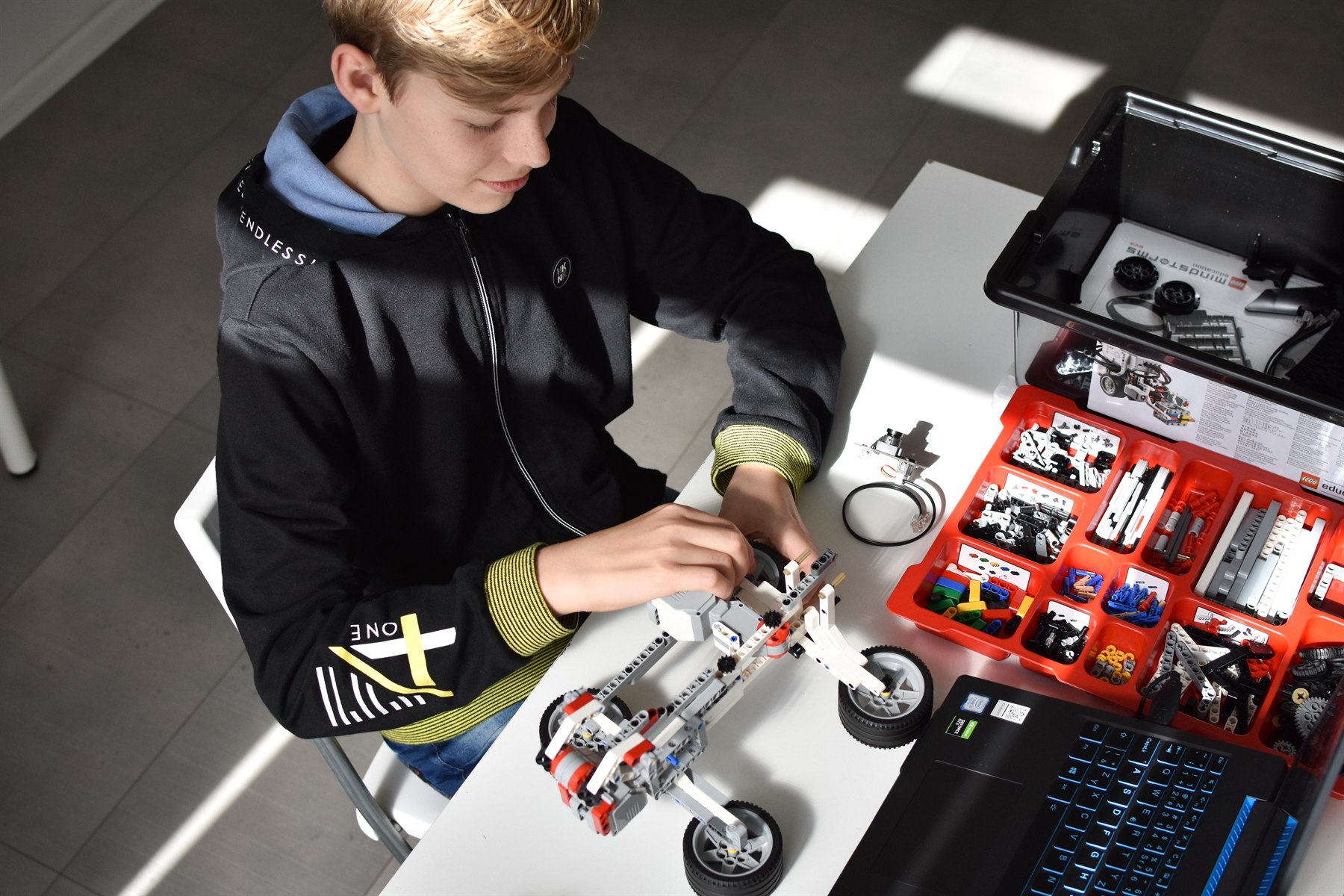 JUNIOR / Ages 10-14
APPROACH / 02
At this stage, students can connect abstract concepts with what a physical or digital system actually does.
technical challenges
guided problem-solving
systematic debugging
measurement and error
increasing independence
conditions · loops · decision trees · decomposition
variables · proportions · angles · coordinates · speed
movement · friction · force · sensors · feedback
visual and text code · variables · functions · debugging
sensors · calibration · autonomy · reliability
Materials and tools
Programmable controllers, sensors, motors, measurement tools, visual and text-based programming environments selected by readiness.
PROGRESSION / 03
Role of competition
Optional for motivated, technically ready students; used as skill validation, never mandatory participation.
The educational system is unified, but each student’s path is adapted to age, independence, logic and technical readiness.
Enroll