Logic
matching · sorting · simple rules · before and after
Robotics for Children Ages 3.5–6 in Prague – Minis
Hands-on play develops observation, comparison, sequencing, construction and the first language of cause and effect.
Enroll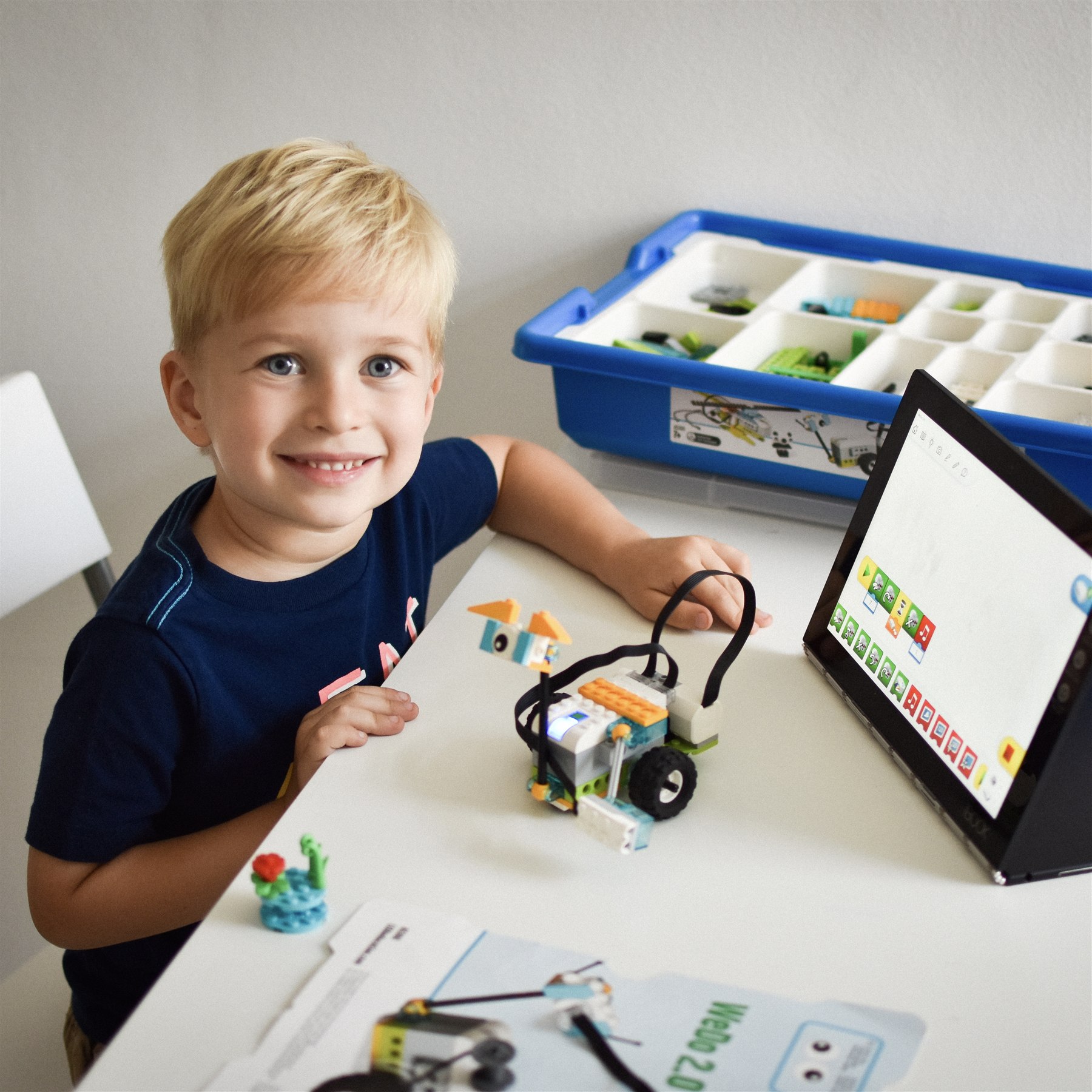 MINIS / Ages 3.5-6
APPROACH / 02
At this age, technical learning begins with safe materials, short activities and questions that help children notice what changed and why.
short activity cycles
large tactile materials
movement and repetition
clear visual feedback
supportive adult guidance
matching · sorting · simple rules · before and after
counting · size · shape · comparison · position
push and pull · rolling · balance · cause and effect
first and next · routes · repeating patterns · instructions
joining · stability · testing · changing · describing
Materials and tools
Large safe construction elements, mechanical models, sorting sets, movement games, picture cards and simple programmable toys used with an educator.
PROGRESSION / 03
Role of competition
No competitive pressure. Children may complete playful shared challenges where curiosity and cooperation matter more than speed.
The educational system is unified, but each student’s path is adapted to age, independence, logic and technical readiness.
Enroll